Adam's voice was patient, as if Declan were a child. "Imagine a world where all the things the Ronan Lynches of the planet have dreamt over the years begin to wake up. Over the decades. Centuries. Think about legends that could be talking about dreams. Think about all the monsters. Dragons. Minotaurs. How many of those things are just stories and how many of those things were dreams that are sleeping now because the dreams died long ago? Right now, Ronan's limited by how strong the ley line is. How many Ronans are there? What would they do without any limits? Stop thinking about Matthew for a second and think."
And now it began to spool out in Declan's mind, a future where dreamers with ambition broke the economy, changed the art world, dreamt escalating weapons. Niall and Ronan's skill hadn't been threatening because it had been limited both by ability and scope—they wanted to live in the world as it was. But someone with absolute power and no checks and balances, Declan thought, someone with ambition...
The question I'm asking myself is:
Was this not all that good, or was I just really tired?
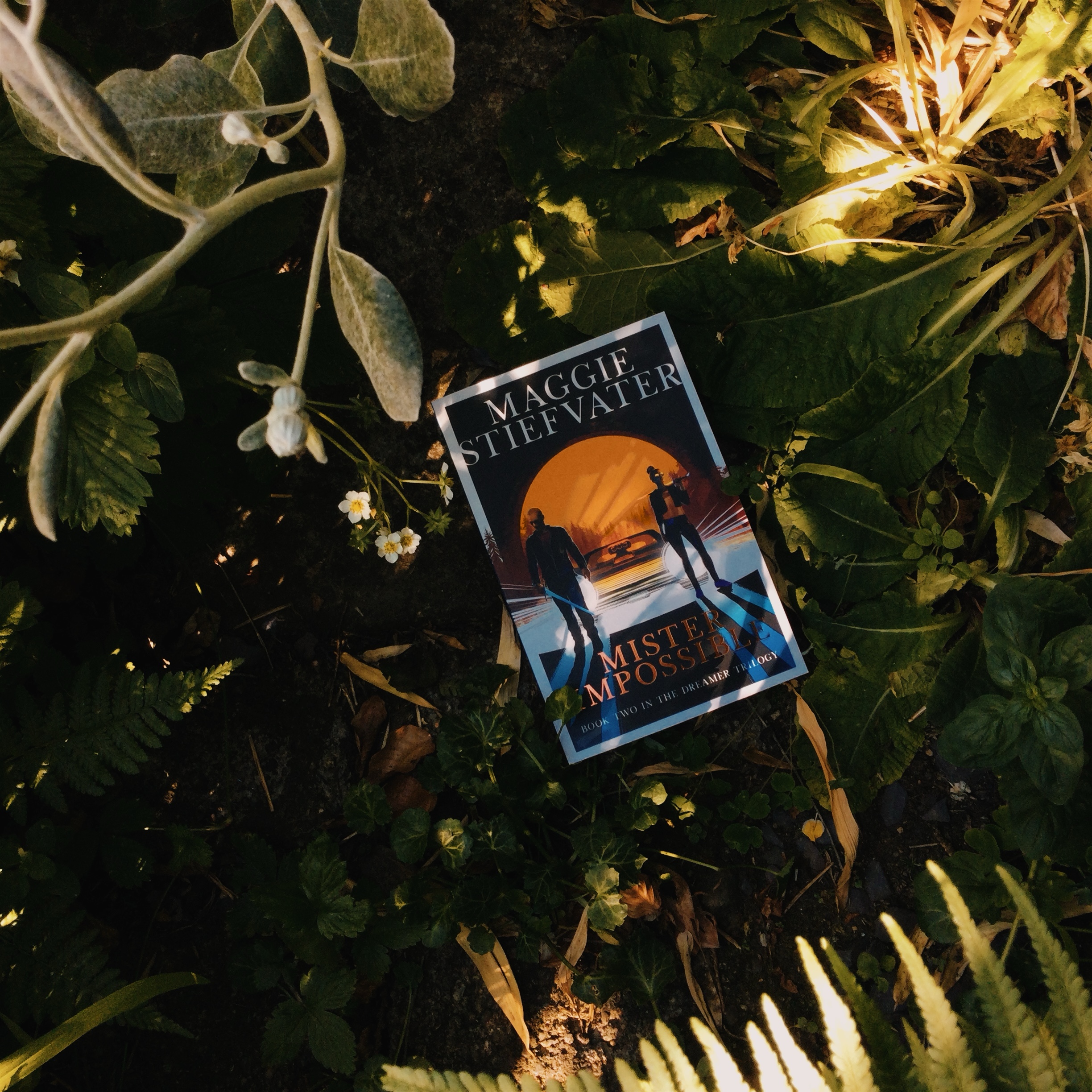
Arguably, the "tired" portion of that quandary is somewhat redundant because I'm a millennial night owl with routinely disturbed sleep, high anxiety, and prone to three-plus day headaches (migraine, barometric, nerve, sinus, take your pick!), ie. I'm always tired. But it's actually a great barometer for my enjoyment of a story, whether I'm passing out mid-chapter when my exhaustion levels are base level that day - if the Sandman's whisking me away before a full stop, you know the book ain't booking. And, as much as it pains me, I was crashing out hard more than sporadically throughout Mister Impossible.
Now, in fairness, I read Call Down the Hawk, the first in the trilogy, way back in June of last year, so it understandably took me a minute to get to grips with what the fresh hell was going on in the story (I'm a mood reader, so waiting a year or more to read the next in a series is business as usual, but it does cause consistent recollective issues because I hold vibes in my head, not whole ass narratives). So, it's not totally the story's fault that I was catching my fair share of z's early on in the first few chapters, but the further the story continued and the tighter my grasp on the world-building/characters/plot became, those episodes of reading-based narcolepsy continued to occur, and the more I felt my hope dwindling for that echoed spark of joy I felt reading CDtH. And, y'know, I can acknowledge that the middle book in a trilogy can often be a difficult one because it plays a vital role in setting the scene for the conclusion, so more often than not it becomes a book of intricately intertwined storylines being either wound more tightly together, or unwound just enough to get the reader where they need to go for that final foray. It's a vital part of storytelling, and when done well will be just as exciting and involving as its former and latter, but when done badly it can feel a tad perfunctory, a little heavy on the exposition, and somewhat aimless and meandering, which ultimately leads to the reader begging the question: why not edit this down and make it a duology instead?
And I think this is my main problem with Mister Impossible - napping disease, aside - that even though I can see what Maggie Stiefvater was doing, I can see that she wanted to lead us on a merry chase through multiple narratives to ultimately land us at the hulking door of a grand reveal which truly alters everything we know about Ronan so far, a character I've been devoted to since his first sneer in The Raven Cycle series. I get it, I appreciate it, I just wish it had felt less like being sedately spun in zigzagging directions with very little grasp on where the fuck it's all headed, and more like a marginally hunted, purposeful trot through a labyrinth to the life-altering Kinder Egg Surprise at the centre.
And, yes, I'll admit it, when this spinoff trilogy for the Lynch brothers was announced, I was clicking my heels thinking this would be the time we'd finally get to properly see Ronan and Adam together as a couple, dreaming together, raising Opal, taking naps with the dream-cows at The Barns, visiting Adam at university, maybe planning time with Blue and Gansey. It was an idyllic dream borne of too many magically sun-warmed summers spent in Virginia hunting for a sleeping king of legend, a dream I should've known would stay simply that with Stiefvater at the helm because she never does anything I expect. She's the author who writes ghost boys and kisses that kill, sentient forests and dream-brothers, she's the author who punishes and pleases in equal measure, and I should've known better. Which is exactly why I'm taking Mister Impossible for exactly what it is: a story I didn't love, but one I have full faith will lead me to the dramatic and fulfilling coda I'm hoping for. Because I do love this world Stiefvater's created; I revel in her dream-swords wielded by damaged, brilliant characters; I lovingly drag my fingers across this fine-meshed, diaphanous web of connection she's woven. Maybe not as much as for Blue and her Raven Boys, that's a special kind of love, but I can't help but be optimistic for this last venture into the fantastic unknown.
One last dream. One last impossible dream.
I hope it goes out with a bang, followed by a chorus of crickets in the heat of summer, chipping merrily by the heads of two men lazing in the high grass of a magic estate in the Virginia highlands, deep asleep, dreaming, and so very happy.
"Ronan Lynch, what do you want?"
[...]
A world where Matthew could just live.
A world where Ronan could just dream.
A world where every dream was clear and crisp and east to navigate, so there were never accidents or nightmares.
He wanted it.
It had been so long since he'd wanted something to happen, instead of wanting something not to happen. He'd forgotten what it felt like. It was equal parts great and terrible. It burned.
[...]
He took a deep, shuddering breath. The fire was burning everything except for them.
It took a couple of years but we finally got to graduate with these Aussie goblins, and it was...
Well, I'm actually not totally sure yet, to be honest. I do believe this is going to call for a rewatch - oh, the suffering! - to see how it all fits together as a whole. A showing of teen, gremlin-y brilliance? Why yes, I do believe it will be!
Can't recommend this show enough if you haven't watched it. I know teen dramas aren't everyone's thing - because they're normally full of whiny little bitches with the emotional range of a tea-dunked Hobnob - but this one's worth the adolescent, hyperbolic as fuck nonsense because of the real shit it actually takes the time to deal with: Autism, queer identity and relationships, racism, sexism, rape culture, mental health, et al., plus the general fuckery that is being a teenager in the wild. Whilst also being funny as hell with a cast of loveable characters who bring new meaning to the words "antics".
Truly. Truly, truly, truly, watch this show, it's one of all-time comfort shows and so worth every second of your time.
I've watched (and read) my fair share of Soulmate stories, and enjoyed... some of them. It's a well-used trope, especially in High Fantasy/Romantasy, and one that I do frequently enjoy. There's something exciting about two characters being bound by some predestined forced, reinforcing their love and connection - I can totally get on board with that. But there does come a point where it becomes sort of rote, and fails to deal with the more insidious side of the trope: what if your soulmate is abusive? Does this kind of forced shackling snatch a person's autonomy from them? Isn't one soulmate a little limiting; what about polyamory? And in the case of Brett Goldstein's take on it, through the means of a scientific test what if your soulmate isn't matched to you, but you know with every fibre of your being that they are. What if the person who's been your best friend for twenty years, the one who knows you through and through, the one who feels the same about you but took the test and matched with someone else, made a life with that someone, doesn't choose you because the test didn't check "yes"?
What exactly defines a soulmate? Biology? Magic? A higher power?
Should be an active choice or a predestined decision?
I think is why, after many other mediocre attempts at the soulmate trope, this is the first one in a long, long while that's made me stop for pause, because it's not actually saying either is right or wrong, simply that it's your right to choose, and that might really hurt.
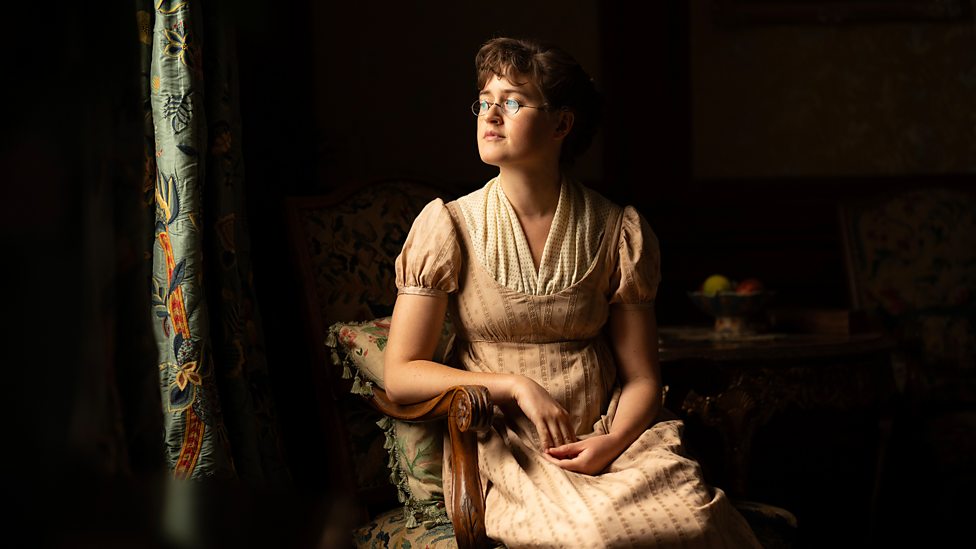
It was a given from the moment I watched the trailer for this that I'd be head over heels for it (BBC-made Austen is a special kind of television that cannot be emulated), but I didn't know I'd burn the world down for Mary Bennet.
I'll admit that whilst reading/watching her character over the years, I rarely laboured an awful amount of time on Mary, going as far to accept her piety and otherness as a mere counterpoint to Lizzie's sociable intellectuality, Jane's inherent goodness, Lydia's desperation, and Kitty's naivety - she's the odd one out and a bit of a killjoy. But I can see now that reducing Mary down to a two dimensional character who exists solely to provide sibling variety, is to rob her of the depth of anguish she has to suffer as someone, a woman specifically, who truly doesn't fit within her family or society. Imagine being academic, an introverted extrovert, socially awkward, not a "great beauty", uninterested and consistently baffled by people, quiet but not without a voice, and surrounded by the Bennets day in day out. The cacophonous Bennets who enjoy balls and bumping into people, who run amuck through Longbourn causing goodnatured bedlam, who enjoy gossip, and get themselves into all manner of interesting situation. Imagine that as the soundtrack to your life when you're Mary, a woman who doesn't dislike these things, but approaches them in an entirely different manner and feels as though must defy those instincts, must mask her true nature (as much as she can) to simply get by without a fuss.
Honestly, same, Mary, same.
I think a lot of people will watch The Other Bennet Sister and find in Mary a kindred spirit because she's a mirror to how it feels to be a woman in a patriarchal society, neurodivergent, autistic, anxious, not "conventionally" good-looking, bewildered by love/sex/relationships, socially inept, an over-thinker, and how those people often feel perpetually out of place and unwanted.
Mary Bennet isn't a pious killjoy, she isn't a misery and a bore, she's a neurodivergent icon who makes me want to squish her cheeks and make me her show me her extensive rock collection. This brave, funny, brilliant woman who simply needed her own story to find her own way to her own happy ending, and The Other Bennet Sister was the perfect one to do it. This mini series truly is a triumph in the Austen collection, one I'll be rewatching time and time again because it is still a love story, it still ends happily as all romance should, it still makes you swoon and root for the couple to get over themselves and just kiss already, but it does it by being entirely itself. No frills, not much hyperbole, just quiet heart and the essence all Austen stories have at the core of them.
I'm so happy this met my expectations and then railroaded right over them by being infinitely more wonderful than I could've imagined.
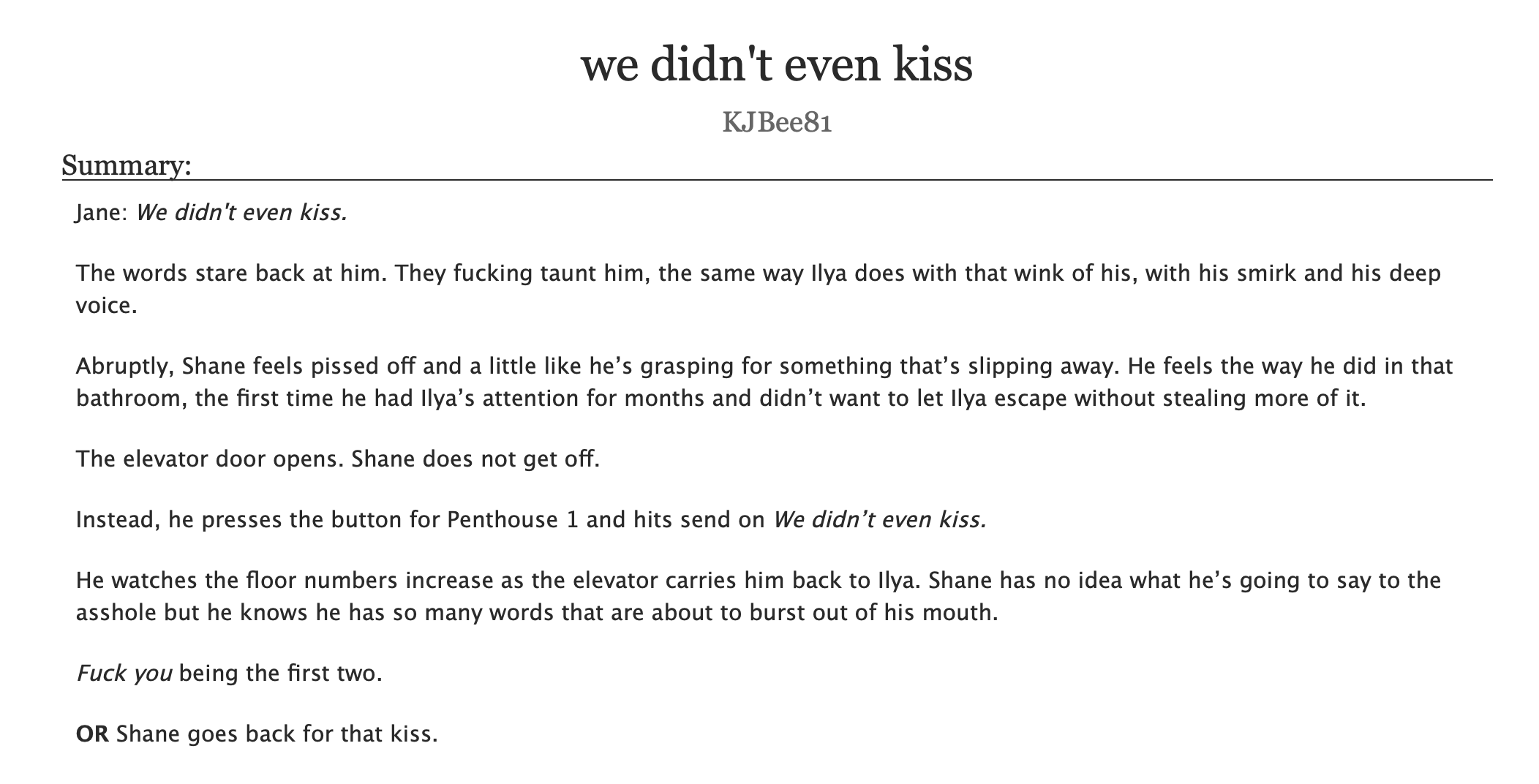
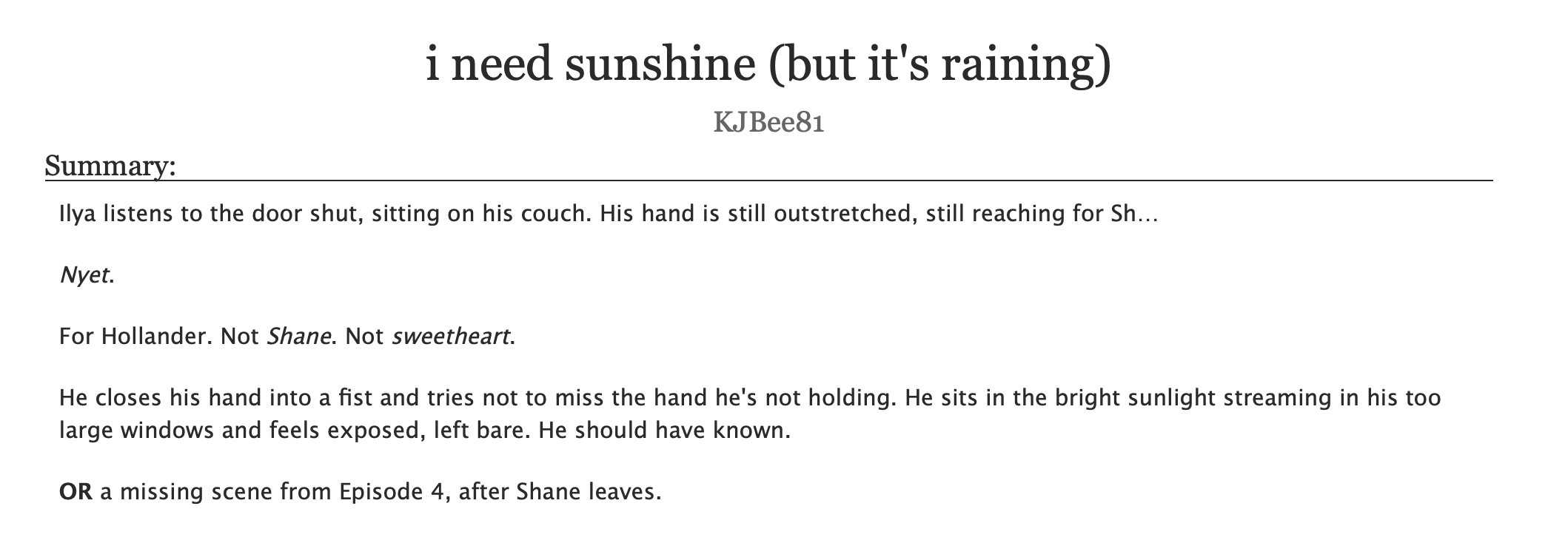
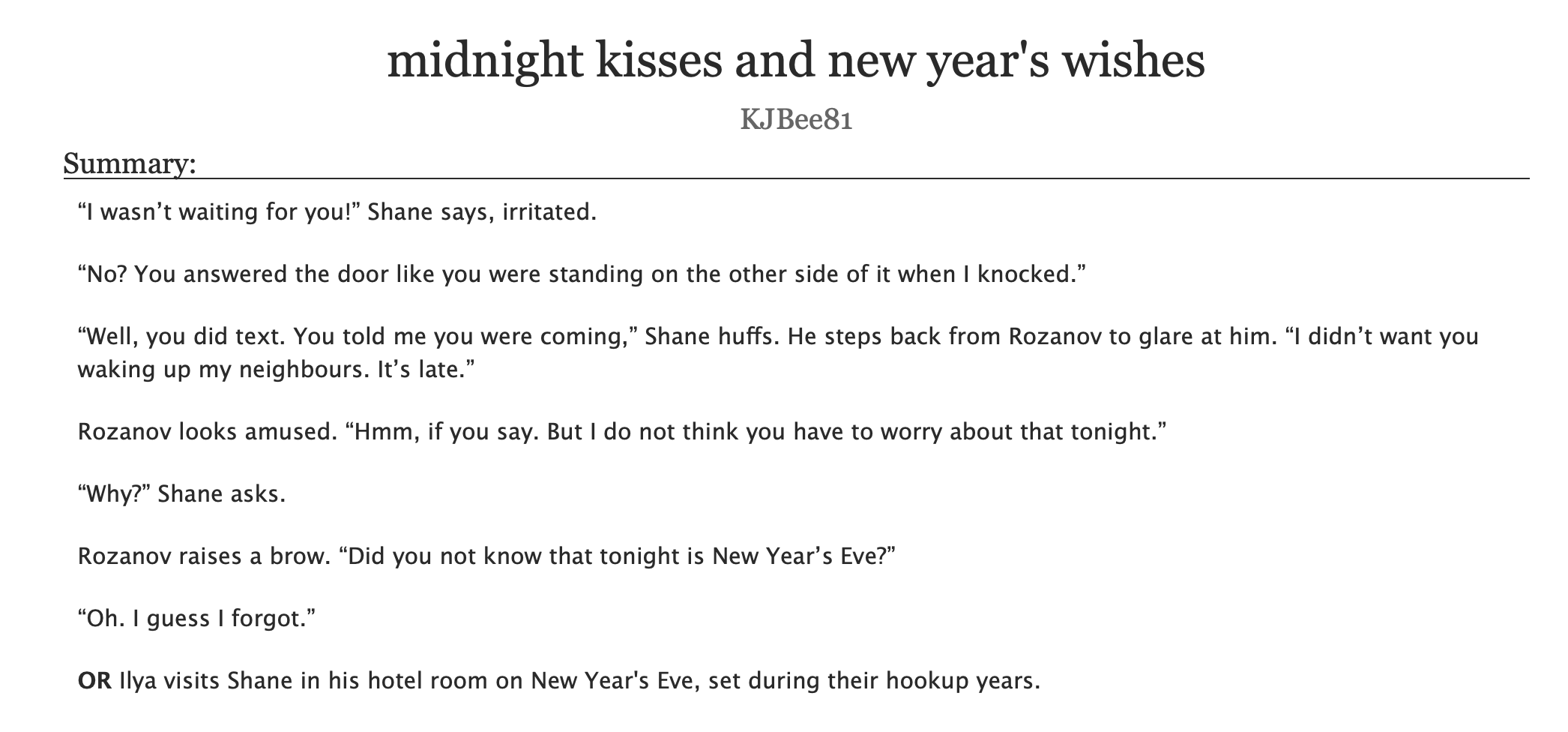
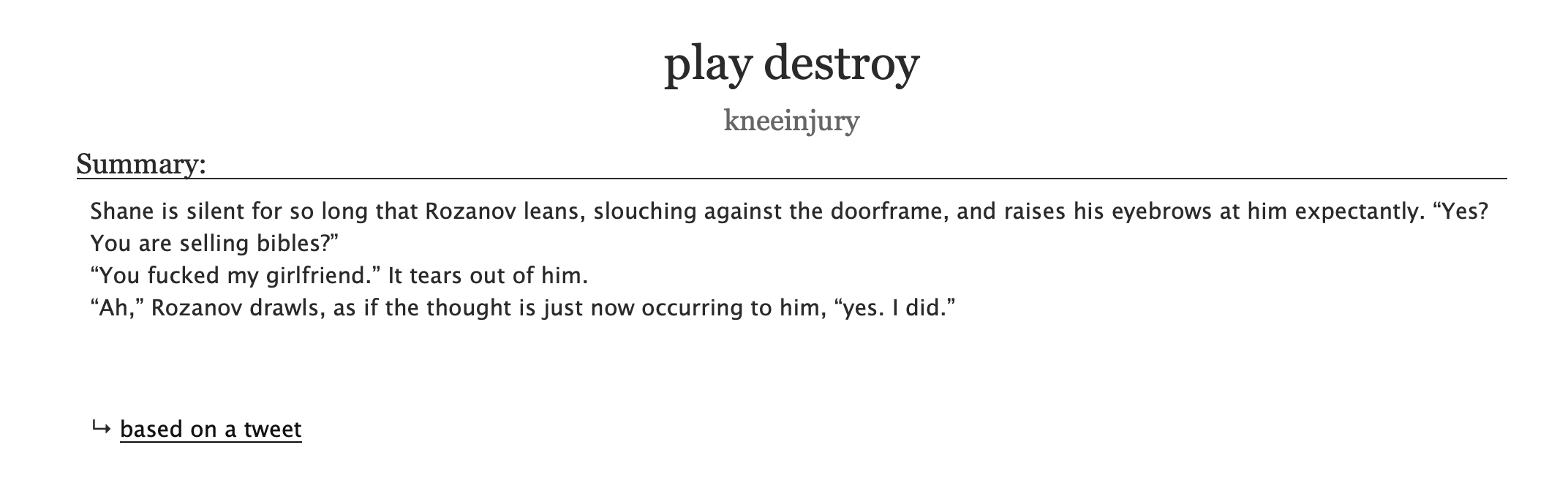
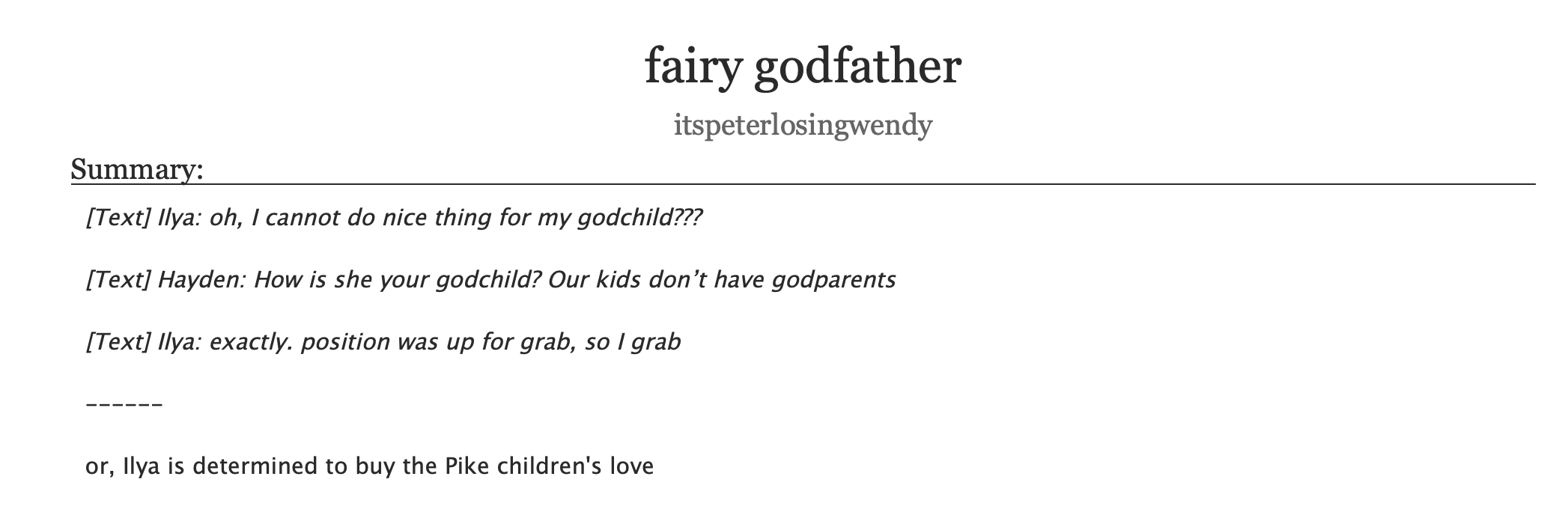
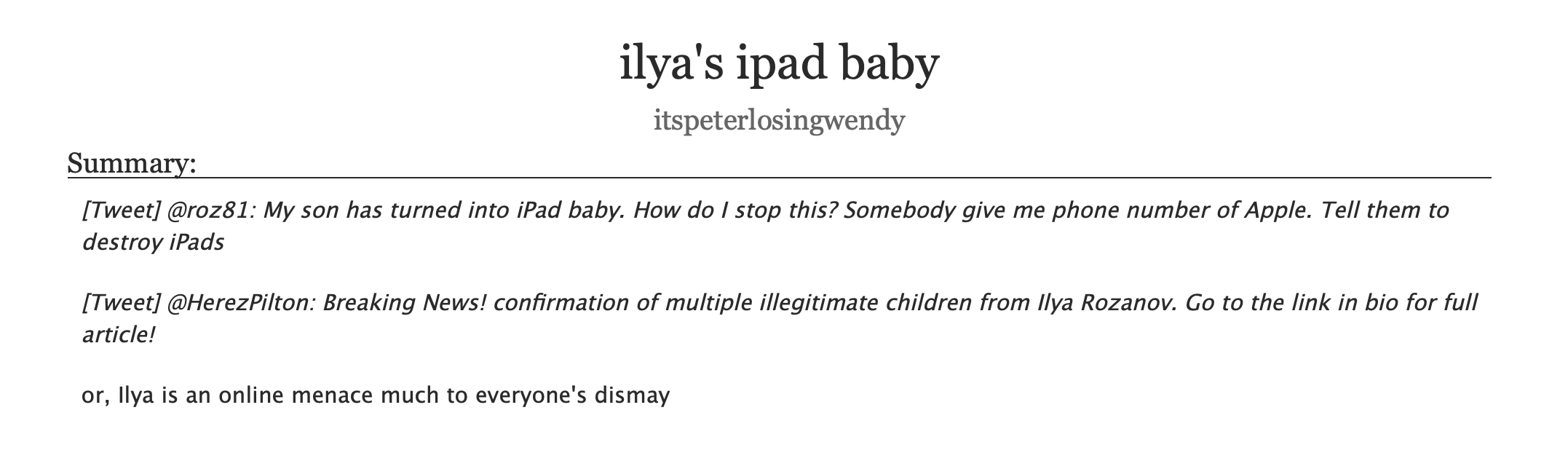
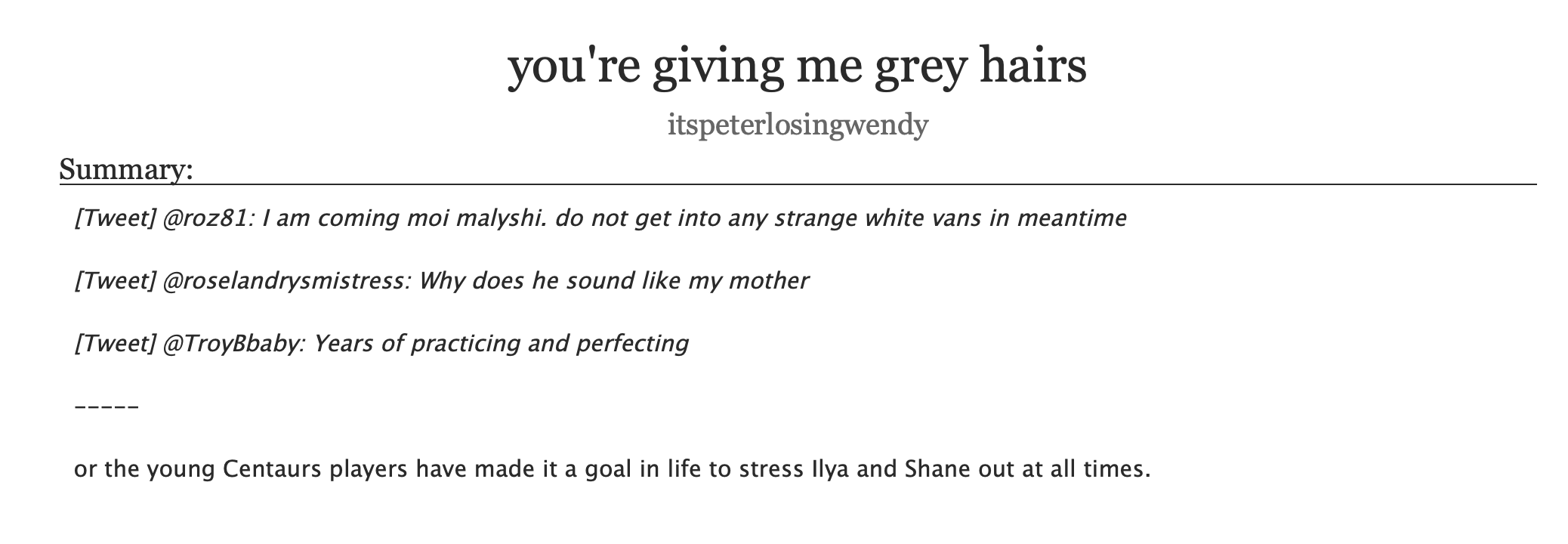
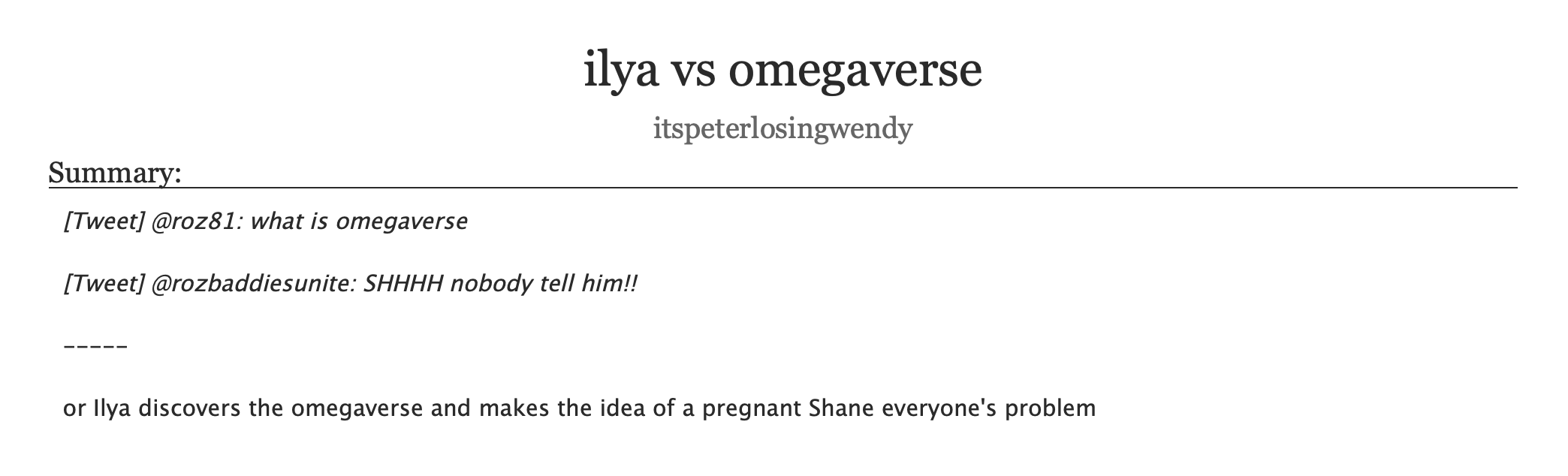
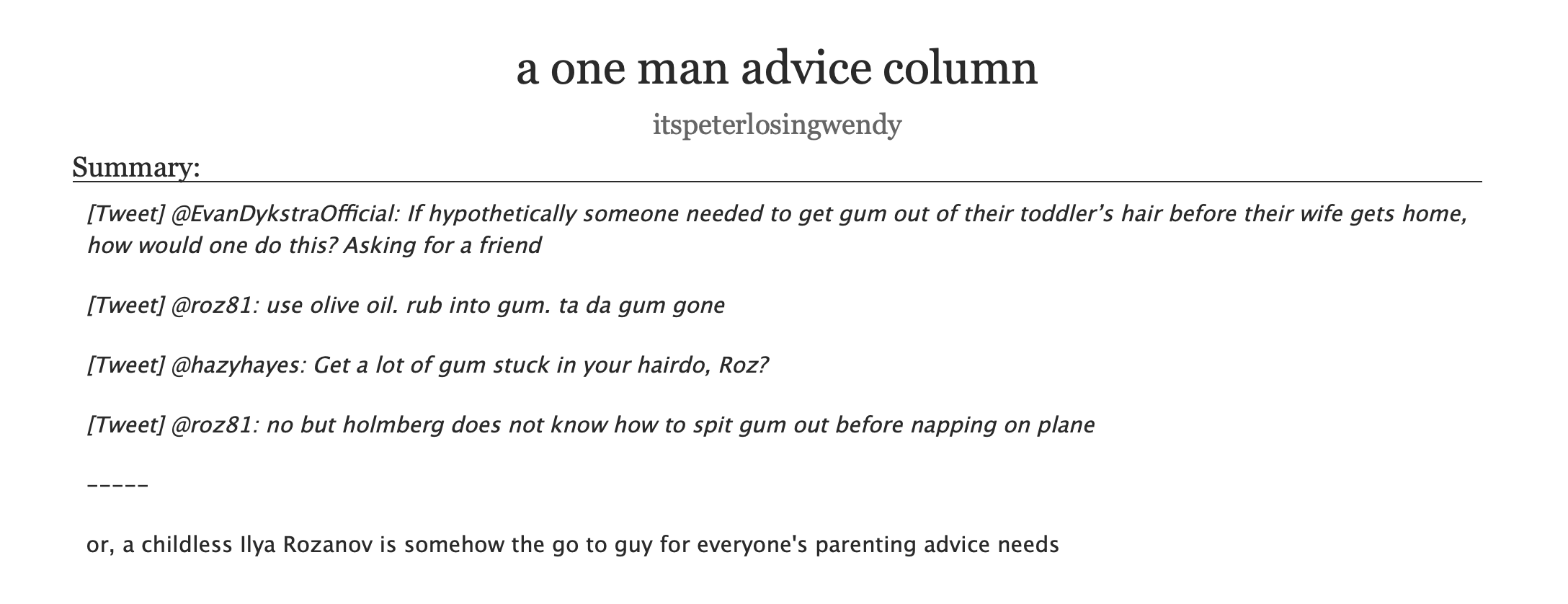
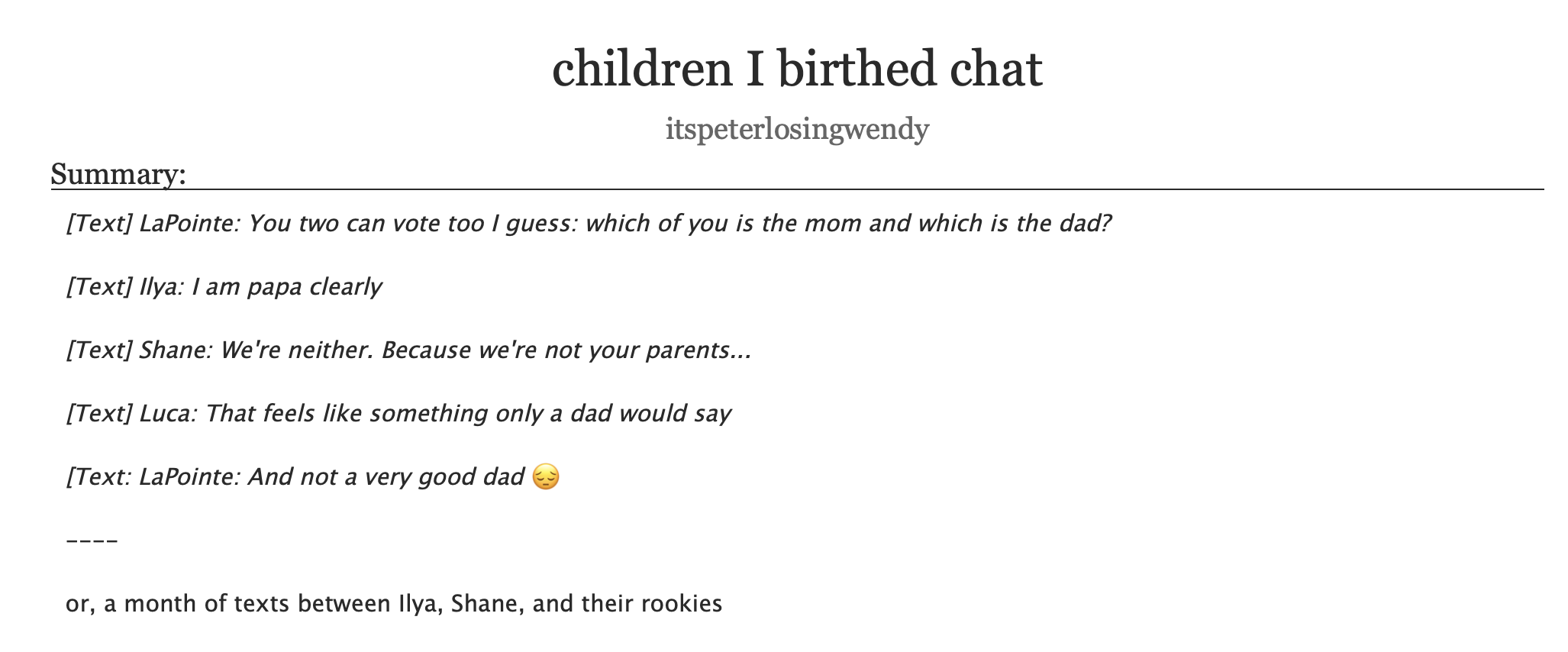
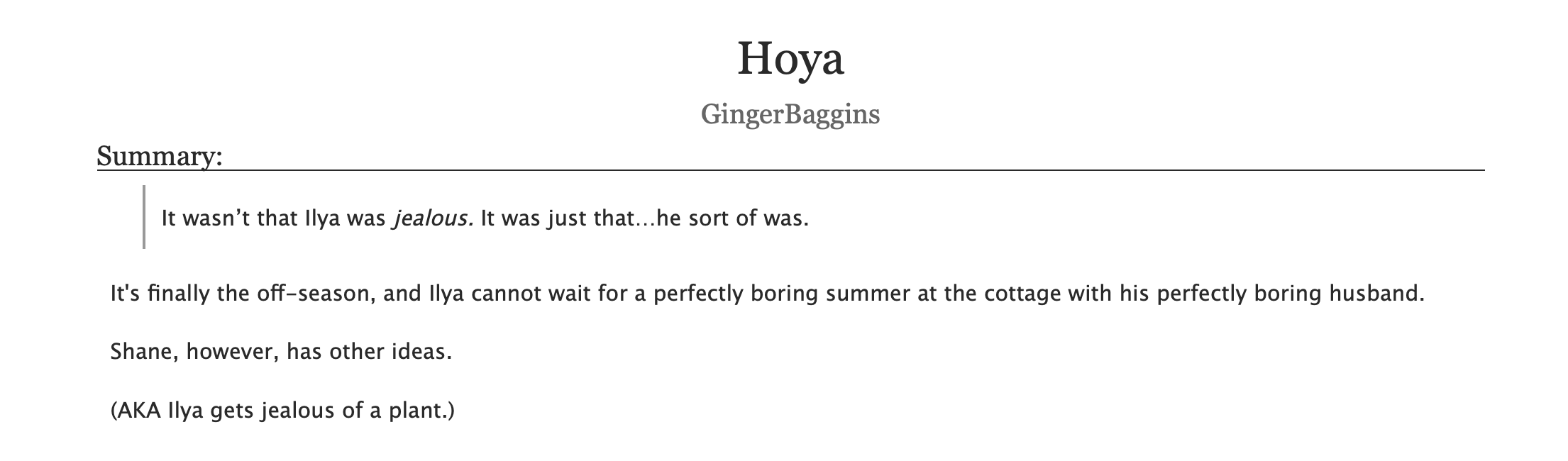
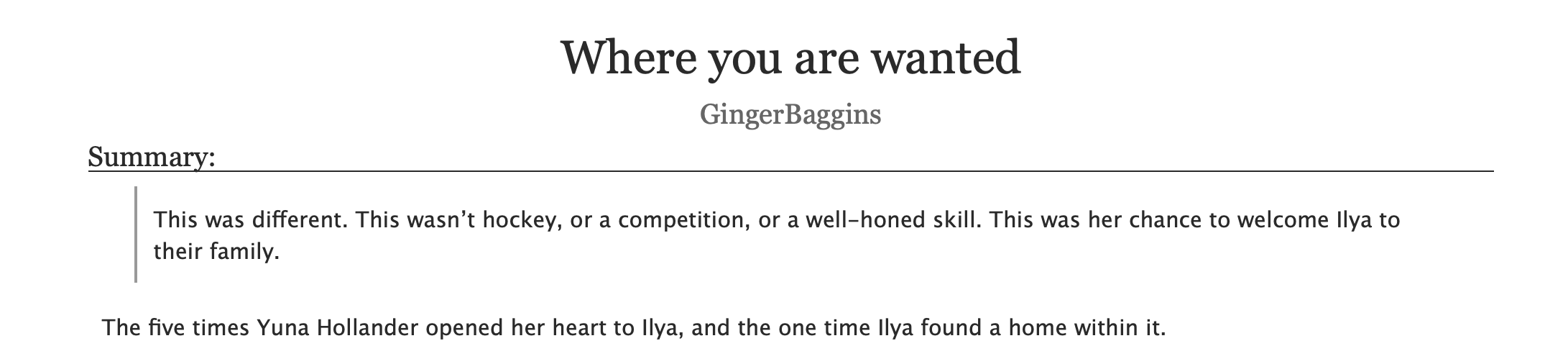
I'm not a full-time fic reader, so there are waaaay better people to go to for recommendations, but I can say with full authority (mine, I'm the authority) that these all slap and if you're needing some extra time with Hollanov, I'd get tore right into these immediately:
Should I make a Reading Masterlist section just for this?
(this may take years, btw)
.............................................
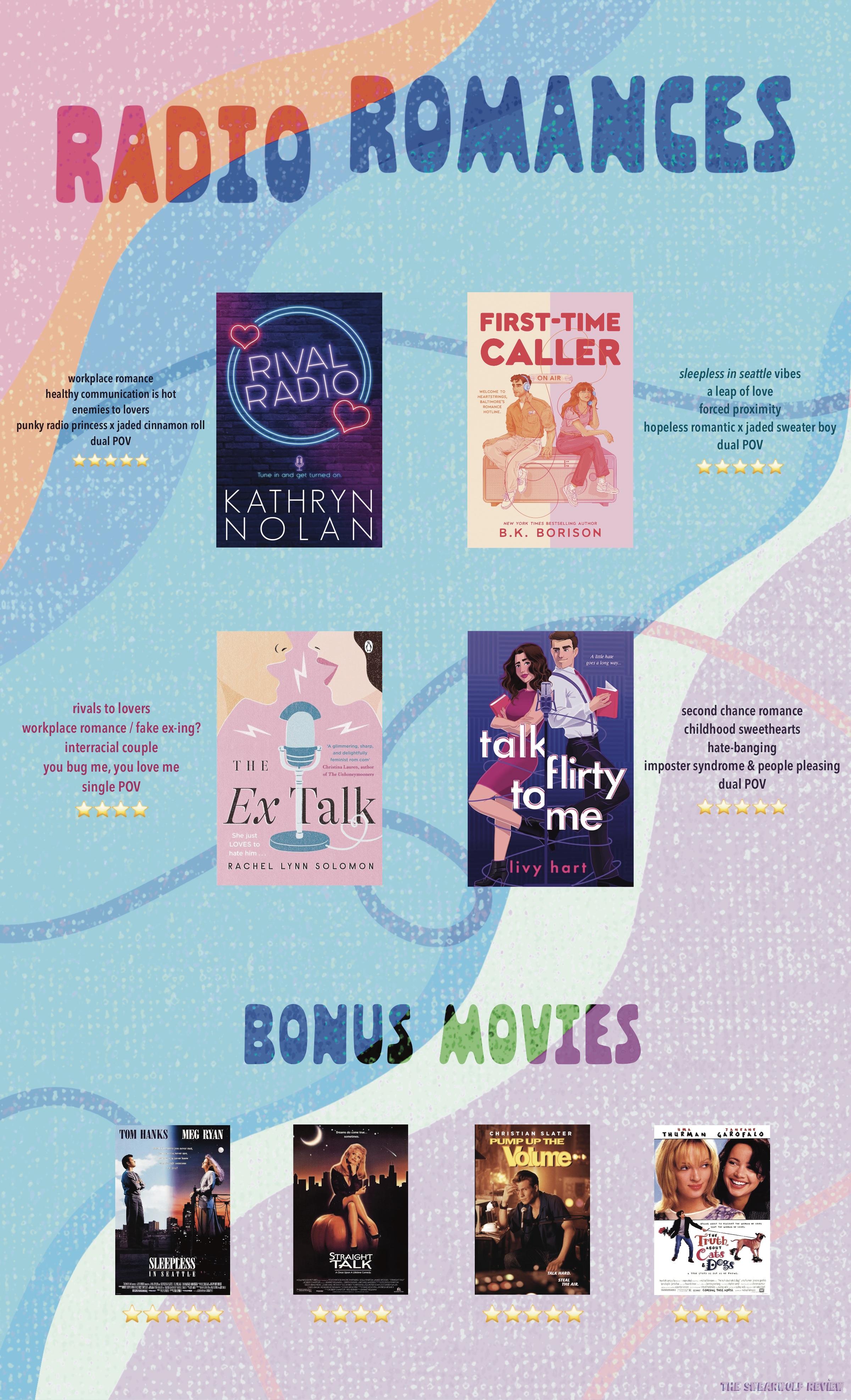
Radio Romances:
There's this really niche sub-genre of romance featuring radio hosts, like really niche, practically a footnote. And I hadn't noticed until I finished First Time Caller by B.K. Borison(★★★★★)that it's a niche sub-genre I'm very into, and desperately hoping more authors/directors will get in on so I can indulge myself to capacity on raspy, resonant voices and quick-witted banter-flirting.













Post a Comment